How to Choose the Best Cooling Centrifugal Fan for Your Needs?
Choosing the right Cooling Centrifugal Fan can be a daunting task. With numerous options available, it is essential to make an informed decision. Industry expert Dr. Emily Carter emphasizes, "A well-chosen cooling fan can significantly enhance system efficiency." Her insight highlights the importance of understanding your specific needs.
When selecting a Cooling Centrifugal Fan, consider factors such as airflow, pressure, and energy efficiency. These elements directly affect the performance of your equipment. Ensuring that the fan aligns with your operational requirements is crucial. Often, users overlook the importance of the fan's material and design. This can lead to inefficiencies.
Moreover, the fan's noise level can impact the working environment. Many professionals underestimate how sound can affect productivity. A quiet fan can improve comfort in a workspace. It's essential to weigh all aspects before making a choice. Understanding your unique requirements is key. Doing so will ultimately guide you toward the best Cooling Centrifugal Fan for your application.
Choosing the Right Size and Capacity for Your Cooling Centrifugal Fan
When selecting the right size and capacity for a cooling centrifugal fan, it is critical to consider airflow requirements first. The fan's airflow, measured in cubic feet per minute (CFM), should match the needs of the space. For example, a standard office area might require a fan that can provide around 400-600 CFM. This range ensures effective circulation without excessive noise. Reports indicate that fans operating within optimal airflow ranges can increase energy efficiency by up to 40%, decreasing operational costs significantly.
Another important factor is the static pressure, measured in inches of water column (in WC). Higher static pressure ratings are necessary for systems with long duct runs or numerous bends. A fan should be chosen that can maintain performance under the specific static pressure conditions. According to industry standards, a typical fan selection process involves mapping the static pressure and airflow requirements on a performance curve. Many users underestimate the impact of this setting; in practice, mismatches can lead to system inefficiencies and overworked fans.
In addition to size and capacity, it is also wise to consider the environment in which the fan will operate. Factors like temperature, humidity, and dust levels can affect performance. In harsh conditions, a fan's efficiency might drop by as much as 30% if not appropriately rated. Analyzing these conditions before purchasing a fan is essential. This reflection often uncovers surprising needs that can lead to better long-term solutions.
Cooling Centrifugal Fans Size and Capacity Comparison
Understanding Different Types of Cooling Centrifugal Fans
When selecting a cooling centrifugal fan, it's crucial to understand the different types available.
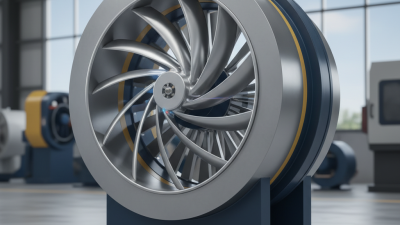
Centrifugal fans come in various designs like backward-curved, forward-curved, and radial blades.
Backward-curved fans are efficient for high airflow with lower noise, making them ideal for commercial spaces.
Forward-curved fans, on the other hand, provide a compact solution with high volume but might be noisier.
Radial fans excel in pressure and can handle thicker air but require more energy.
Tips: Choose a design that aligns with your space requirements. Evaluate the noise level you can tolerate.
Consider the fan's application as well. For instance, if you are cooling industrial equipment, a robust radial fan could be the answer.
However, for office environments, prefer quieter backward-curved models.
Also, assess the power requirements and efficiency ratings. Not all fans are made equal; some may consume more energy than intended.
Tips: Don't overlook energy efficiency. Higher initial costs can lead to savings.
Always read reviews and seek expert opinions on performance reliability. Understanding these nuances can greatly enhance your selection process.
Evaluating Noise Levels and Energy Efficiency in Fans
When selecting a cooling centrifugal fan, two critical factors come into play:
noise levels and
energy efficiency.
Many consumers underestimate the importance of noise. A loud fan can disrupt both work and leisure.
Look for fans designed to operate quietly. Consider using decibel ratings during your evaluation.
Many good options exist that maintain performance while minimizing sound.
Energy efficiency is equally vital.
A fan that consumes less energy will save costs in the long run.
Check energy ratings and compare them.
High-efficiency fans not only reduce your electricity bill but also lessen environmental impact.
Balancing efficiency with noise is challenging.
Many fans sacrifice one for the other, which can leave you unsatisfied.
It’s crucial to weigh your priorities and usage scenarios carefully.
Finding the right fan might be more complex than it seems.
Take the time to research user reviews and expert opinions.
Real-world experiences offer valuable insights into performance.
Sometimes, a fan model that seems perfect on paper might disappoint in practice.
A careful assessment of noise and energy efficiency will lead to a better match for your needs.
Identifying Key Features and Specifications of Cooling Fans
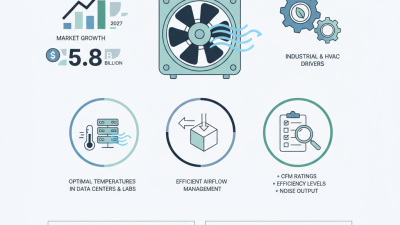
When selecting a cooling centrifugal fan, understanding key features is essential. First, consider airflow capacity. Measured in cubic feet per minute (CFM), this indicates how much air the fan can move. If your space requires high air circulation, choose a fan with a higher CFM rating.
Next, look at the fan's noise levels. Some models operate quietly, which is critical for environments like offices and libraries. You might prefer a fan with a decibel rating under 50 dB for a peaceful atmosphere. Additionally, ensure the fan has adjustable speed settings. This allows for better control of airflow according to your specific needs.
Durability is another important factor. Check the materials used in the fan's construction. Metal housing generally offers more longevity compared to plastic. Fans may wear down over time if not well-designed. Regular maintenance can also affect their performance. Review the ease of cleaning and servicing the fan to ensure it lasts longer. If unclear, don’t hesitate to reach out to professionals for advice or clarification on features. Your choice should balance between performance and your unique requirements.
Considering Maintenance and Installation Requirements for Fans
Selecting the right cooling centrifugal fan involves understanding maintenance and installation requirements. Proper installation ensures optimal performance, while regular maintenance extends the fan's lifespan. According to industry reports, over 30% of fan failures stem from improper installation or lack of upkeep.
When installing a centrifugal fan, ensure the space allows for adequate airflow. Placement affects efficiency and noise levels. Some installations are more complex, requiring skilled technicians. Proper sealing and alignment can minimize vibration and increase efficiency. However, these tasks might be overlooked, leading to increased operational costs.
Maintenance is equally critical. A regular inspection schedule helps catch issues early. Dust and debris often accumulate, hindering performance. Cleaning can boost efficiency by up to 20%, as stated in several industry studies. Neglecting maintenance may result in unanticipated downtime and costly repairs. Careful attention to these factors is essential for achieving optimal performance while considering the fan's total lifecycle costs.