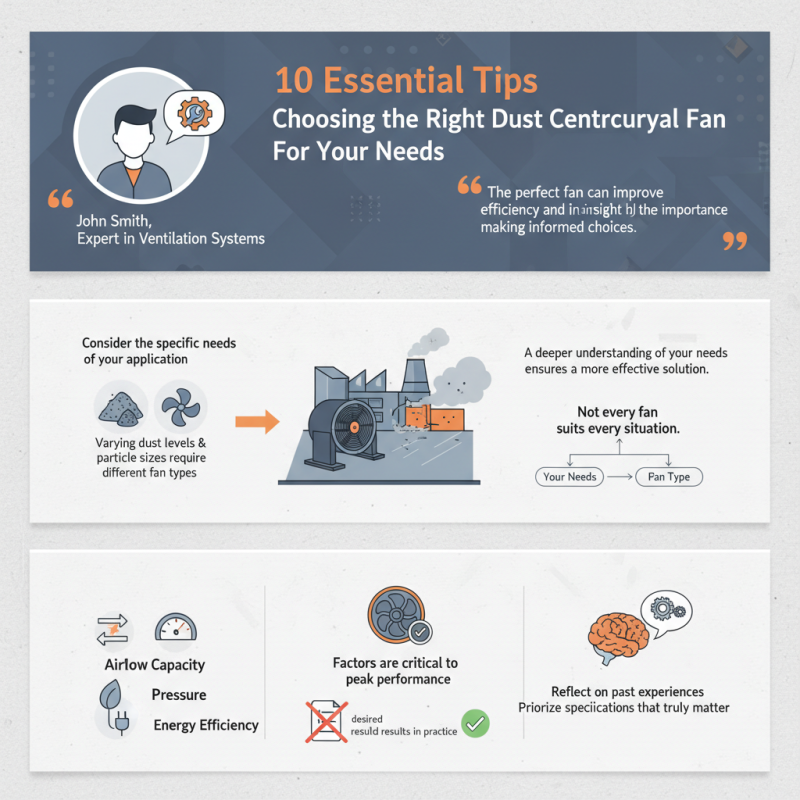
Choosing the right Dust Centrifugal Fan can significantly impact your workspace environment. According to John Smith, an expert in ventilation systems, "The perfect fan can improve efficiency and reduce dust problems." His insight highlights the importance of making informed choices in this industry.
When selecting a Dust Centrifugal Fan, consider the specific needs of your application. Not every fan suits every situation. For instance, varying dust levels and particle sizes require different fan types. A deeper understanding of your needs ensures a more effective solution.
Pay attention to airflow capacity, pressure, and energy efficiency. These factors are critical to achieving peak performance. Remember, a fan that seems perfect on paper may not yield the desired results in practice. It's vital to reflect on past experiences and prioritize specifications that truly matter.
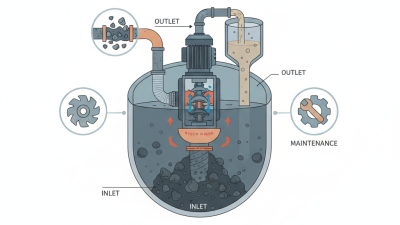
When selecting a dust centrifugal fan, it's crucial to understand its basic components and functionalities. These fans are designed to manage air that carries dust particles. They operate on the principle of centrifugal force, drawing air in and expelling it at high speed. This mechanism creates a steady airflow, effectively removing dust from spaces where cleanliness is vital. Many people overlook the importance of airflow rates. Choosing a fan with the wrong capacity can lead to inadequate dust removal.
Efficiency matters, too. A fan with high energy consumption may not be productive in the long run. Noise levels are another aspect often ignored. Some fans can be excessively loud, causing discomfort in the workspace. It’s advisable to consider both performance and noise when making a choice. Maintenance is essential; replacing filters and checking for blockages can prolong the life of your fan. Ignoring these details may lead to frequent breakdowns or inefficiencies. Understanding these basics can significantly impact your decision-making process.
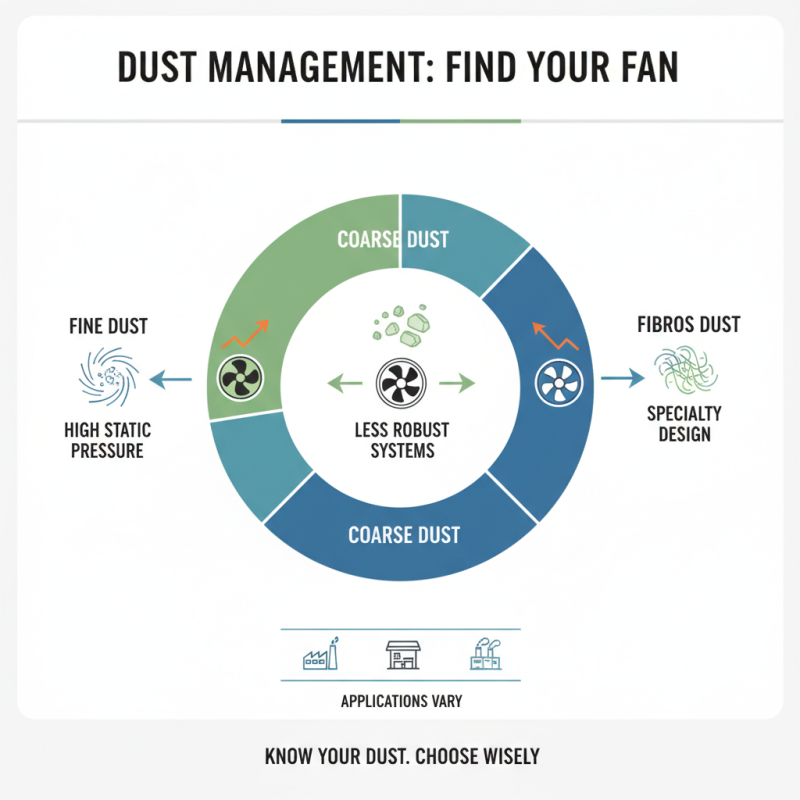
When it comes to dust management, identifying your specific needs is crucial. Consider the type of dust you are dealing with. Is it fine, coarse, or fibrous? Different applications may require different fan designs. For example, a fine dust may require a fan with a higher static pressure. Meanwhile, coarse dust can be managed with less robust systems. Understanding these nuances helps narrow down your choices.
Next, assess the volume of dust generated in your environment. High-volume dust needs a more powerful fan. This is where airflow ratings come into play. Don’t overlook the importance of CFM (cubic feet per minute) ratings. It's also wise to think about the layout of your workspace. If the fan isn't positioned correctly, it may underperform. A few inches can make a significant difference.
Most importantly, reflect on sound levels and maintenance needs. A quieter fan might be essential in a work area with employees. Frequent maintenance can lead to downtime, which is costly. Balancing efficiency, noise, and maintenance is key. These aspects often require deeper consideration during the selection process. It’s easy to overlook them in the beginning but vital to revisit them.
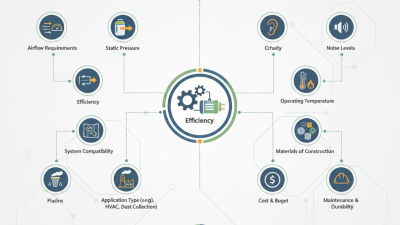
When selecting a dust centrifugal fan, evaluating fan specifications is crucial. Start by examining the airflow capacity. It determines how well the fan can handle your specific dust load. A common mistake is underestimating this figure, leading to poor performance. Pay attention to the static pressure ratings. They show how effectively the fan can overcome resistance in ductwork. If the static pressure is too low, dust may escape the system.
Next, look at the fan's efficiency rating. A higher efficiency means lower energy consumption over time. This detail is often overlooked. Many choose based on initial cost without considering long-term operation costs. Another aspect is the noise level. Some fans operate at a higher decibel level, causing discomfort. It's essential to consider the environment in which the fan will be used. Sometimes, the fan's design plays a role in airflow direction. Correct placement can enhance dust management. Always review the materials used in construction. They should resist the type of dust you're managing to avoid premature wear.
When assessing performance metrics, be critical. Look for third-party tested data, not just marketing claims. Ask for real-world performance details if available. It’s vital to understand the fan’s limitations. Misleading specifications can lead to inefficient systems. Ensure you factor in maintenance needs. Regular cleaning and checks can enhance longevity, which is often neglected. Making an informed decision requires careful consideration of these elements.
| Specification | Description | Importance | Example Value |
|---|---|---|---|
| Airflow Rate | Measured in CFM (Cubic Feet per Minute), indicates the volume of air moved. | Critical for determining the fan's ability to handle dust loads. | 4000 CFM |
| Static Pressure | Indicates the resistance against air movement, measured in inches of water gauge. | Determines efficiency and performance in duct systems. | 10 in. WG |
| Power Consumption | Measured in Watts, indicates energy usage of the fan. | Important for calculating operational costs. | 1500 Watts |
| Noise Level | Measured in dBA, indicates how loud the fan operates. | Essential for maintaining workplace comfort. | 70 dBA |
| Fan Construction Material | Materials like galvanized steel or plastic, affecting durability. | Affects lifespan, maintenance, and resistance to corrosion. | Galvanized Steel |
| Fan Type | Includes forward curved, backward curved, and radial fans. | Determines the fan's characteristics and application suitability. | Backward Curved |
| Temperature Rating | Maximum ambient temperature the fan can operate efficiently. | Critical for high-temperature applications. | 180°F |
| Mounting Type | Wall-mounted, inline, or ceiling-mounted options. | Influences installation and space usage. | Wall-mounted |
| Filter Compatibility | Ability to integrate with dust collection filters. | Important for effective dust management. | Compatible with HEPA filters |
| Warranty | Length of warranty period offered by the manufacturer. | Indicates manufacturer confidence in product quality. | 2 Years |
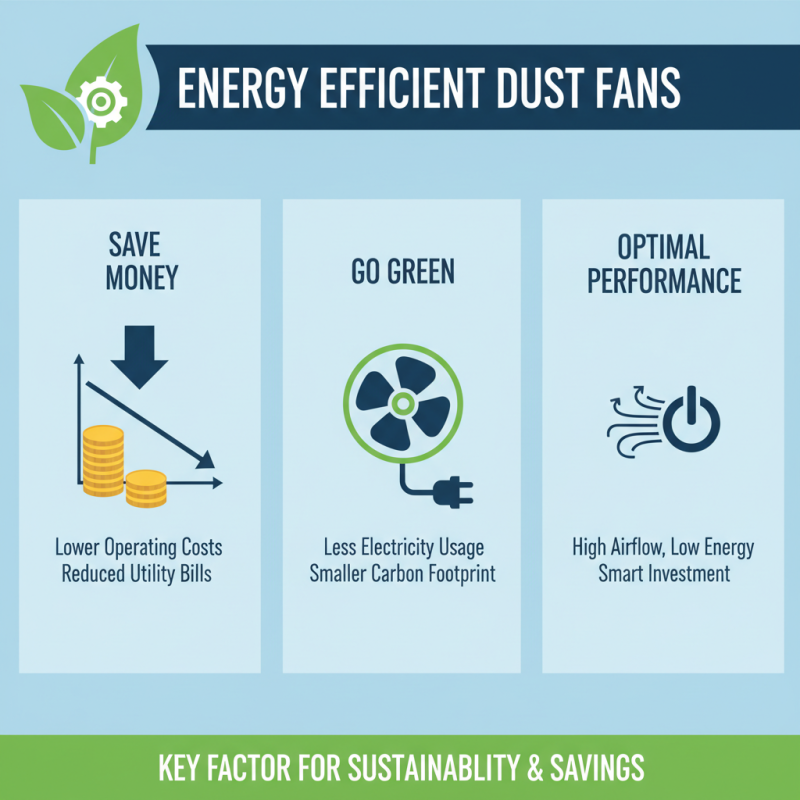
When choosing a dust centrifugal fan, energy efficiency is a key factor. It can significantly impact your operating costs. Energy-efficient fans reduce electricity consumption. This leads to lower utility bills over time. Look for models that are designed to offer high airflow rates with minimal energy use.
Operating costs extend beyond energy usage. Maintenance is critical. Regular upkeep prevents costly breakdowns. Assess the accessibility of the fan for maintenance tasks before purchase. If parts are hard to reach, service costs can skyrocket. Additionally, consider the noise levels. A noisy fan can distract employees and reduce productivity, so be mindful of decibel ratings.
It's also important to reflect on your specific needs. A fan that seems perfect on paper may not fit your unique environment. Analyze the dust type and volume in your area. This will influence the fan's lifespan and efficiency. A mismatch can lead to increased wear and tear. Evaluating these elements will help you make a more informed decision.
When choosing a dust centrifugal fan, installation and maintenance are critical considerations. Proper installation minimizes operational issues. Many fans operate silently, yet improper setup can lead to vibrations. Studies show that up to 30% of fan failure is traced to installation errors. Ensure your team understands the layout and environmental factors affecting performance.
Maintenance can't be overlooked. Dust accumulation can decrease efficiency by as much as 20%. Regular checks of blades and motor bearings are essential. However, weaknesses in access points can complicate these tasks. A convenient design saves time and labor. In fact, a report indicates that poor maintenance practices increase downtime by 15%. This leads to unexpected costs and delays in production schedules.
Pay careful attention to the fan environment. High humidity can cause corrosion, affecting lifespan. Think about using protective coatings. Anticipate potential issues, like airflow disruptions. A well-planned installation and a scheduled maintenance routine can mitigate these risks. Finding the right balance is essential for optimal performance.