What is a Kiln Centrifugal Fan and How Does it Work?
In the world of industrial processing, the Kiln Centrifugal Fan plays a crucial role. John Smith, a leading expert in airflow systems, once said, "These fans are the heart of efficient kiln operations." They ensure proper airflow in kilns, impacting temperature and drying processes.
A Kiln Centrifugal Fan operates by drawing in air and forcing it through the kiln. This movement affects combustion and material drying efficiency. Understanding its mechanics is vital for optimizing performance. However, not all fans are created equal. Some designs struggle with airflow consistency, leading to inefficiencies.
Reflecting on these challenges, manufacturers must consider fan selection carefully. The right Kiln Centrifugal Fan can significantly improve production efficiency. Yet many facilities overlook maintenance, causing unexpected failures. Proper knowledge and regular checks are essential in this crucial system.
What is a Kiln Centrifugal Fan?
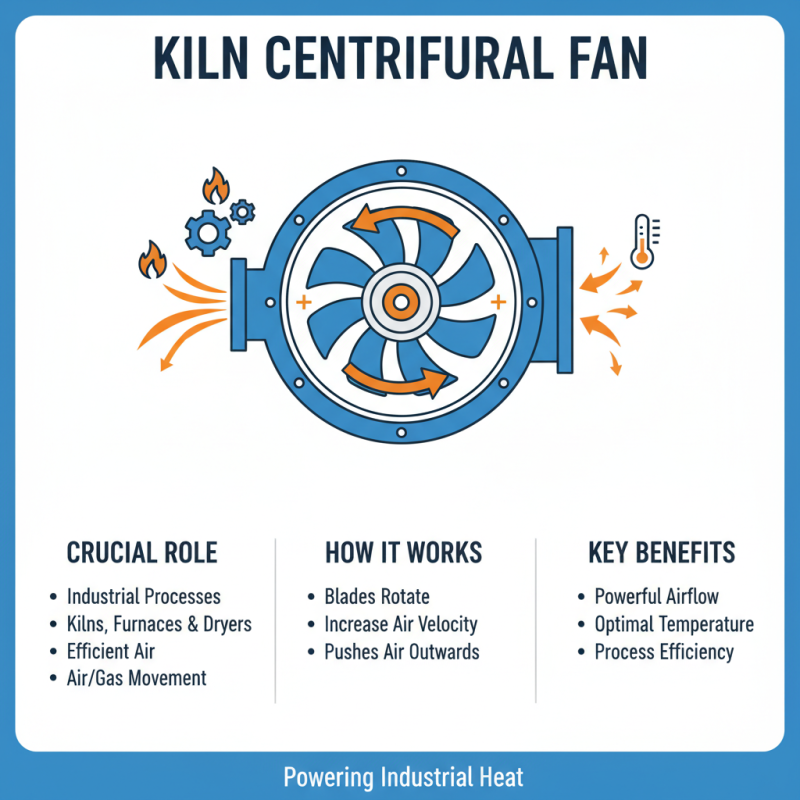
A kiln centrifugal fan plays a crucial role in various industrial processes. It is designed to move air or gases efficiently within kilns, furnaces, and dryers. This fan generates airflow through the rotation of blades. These blades increase the velocity of the air, pushing it outwards. The result is a powerful stream of air, which helps maintain optimal temperatures.
In many applications, the efficiency of a kiln centrifugal fan can significantly impact production quality. For instance, improper airflow can lead to uneven heating. This unevenness can affect the final product. The fan works best when positioned correctly within the system. However, installation mistakes do happen. Some users may overlook the importance of air pressure balance, which can limit the fan's performance.
Maintenance is another area where attention is often lacking. Regular checks on blades and motor performance are essential. A neglected fan may produce unusual noises or vibrations. This can signal problems. Ignoring these signs can lead to costly repairs down the line. Proper care ensures consistent function and longevity of the fan.
Key Components of a Kiln Centrifugal Fan
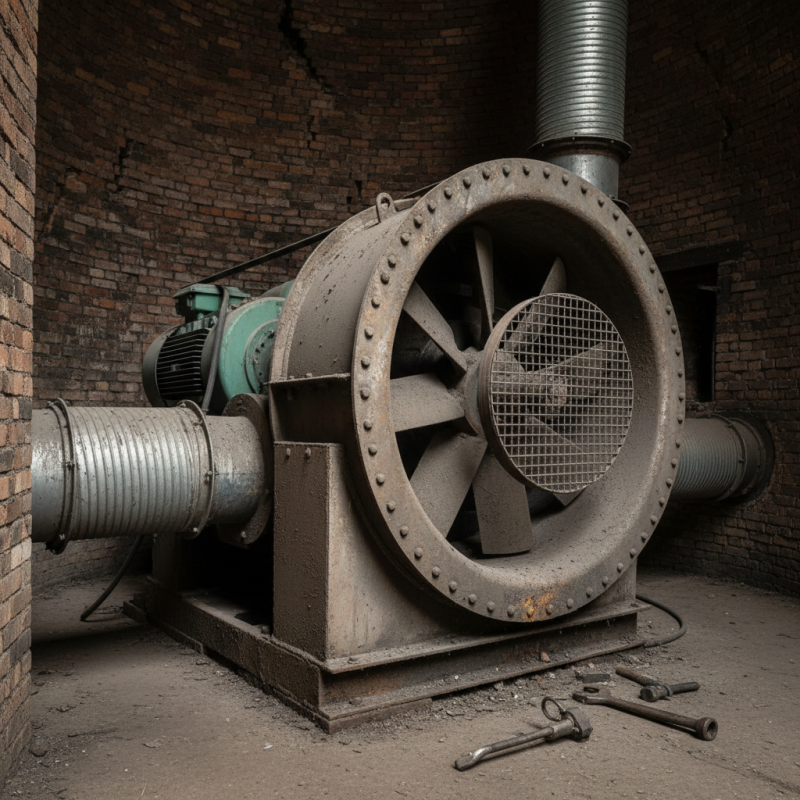
A kiln centrifugal fan is essential in maintaining optimal airflow in industrial kilns. Its design focuses on efficiency and durability. The key components of such a fan include the motor, impeller, housing, and discharge duct. Each part plays a critical role in functioning effectively.
The motor drives the impeller, which spins rapidly to create a pressure difference. This movement generates the airflow necessary for kiln operations. The housing is designed to direct the airflow smoothly, minimizing turbulence. An inefficient housing design can cause backpressure. This could lead to decreased performance and higher energy costs.
Moreover, the discharge duct directs the air into the kiln chamber. A well-designed duct enhances airflow and reduces the risk of hot spots. However, improper angles in the duct can cause air stagnation, leading to inconsistencies in heat distribution. Ensuring the balance of these components is crucial for the overall performance of the kiln. Regular maintenance should not be overlooked, as wear and tear can affect efficiency. Reflecting on the design and upkeep of these components can lead to improved kiln operation.
How a Kiln Centrifugal Fan Operates
A kiln centrifugal fan is essential in many industrial applications. It plays a crucial role in moving air and gases within kiln systems. The operation of these fans involves fundamental principles of fluid dynamics. As air enters the fan, it is drawn through the rotating impellers. This process increases the velocity of the air, converting kinetic energy into airflow. The fan discharges the air at high pressure, which is essential for maintaining the desired temperature in kilns.
The efficiency of a kiln centrifugal fan is often measured in terms of airflow rates and energy consumption. Industry data indicates that fans need to operate at optimal performance levels, often between 70-80% efficiency. This helps to reduce energy costs and improve overall productivity. In some cases, however, improper sizing or maintenance can hinder efficiency. For example, if a fan is too small, it may struggle to generate sufficient airflow. This can lead to overheating and even damage to kiln materials.
Regular maintenance is vital. Dust and debris can accumulate over time, impacting airflow and fan efficiency. In fact, data shows that a buildup of just 1mm of dust can reduce airflow by up to 10%. This highlights the need for regular checks and cleaning. Facilities must also consider how changing production demands affect fan operation. Adjusting to these fluctuations can pose a challenge. Balancing efficiency and productivity is crucial for long-term success in kiln operations.
What is a Kiln Centrifugal Fan and How Does it Work?
| Feature |
Description |
Application |
| Airflow |
The fan generates a specific airflow rate required for the kiln process. |
Cement production, ceramic firing, lime production. |
| Pressure Generation |
Creates a high static pressure to support the kiln's operational efficiency. |
Used in high-temperature applications where air must be moved against resistance. |
| Design |
Typically features an impeller design with backward-curved blades. |
Adaptable for various industrial processes, including drying and cooling. |
| Energy Efficiency |
Designed to optimize energy consumption while maintaining performance. |
Minimizing operational costs in large-scale manufacturing environments. |
| Maintenance |
Requires regular inspection and cleaning to ensure longevity. |
Essential in maintaining the kiln environment and efficiency. |
Applications of Kiln Centrifugal Fans in Industry
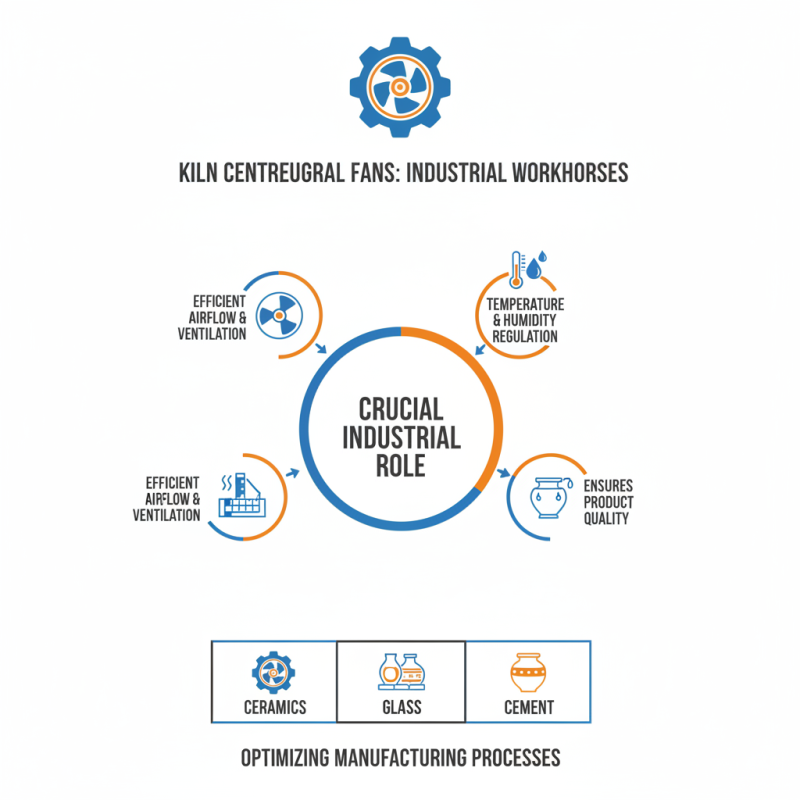
Kiln centrifugal fans play a crucial role in various industrial applications. They are designed for efficient airflow and ventilation in manufacturing processes, particularly in kilns used for drying and firing materials. These fans help regulate temperature and humidity levels, ensuring product quality. Industries such as ceramics, glass, and cement heavily rely on these fans to maintain optimal operational conditions.
In the ceramics industry, kiln centrifugal fans help in drying clay quickly and evenly. Without proper airflow, the clay may not harden uniformly, leading to defects. In glass manufacturing, these fans assist in controlling the cooling rates of glass products. An uneven cooling process can cause cracks or distortions. Cement production also benefits from these fans, as they enhance air handling for combustion processes.
However, not all applications are flawless. Some fans may experience issues with vibration or noise. Regular maintenance is essential to address these challenges. Identifying inefficiencies in airflow can lead to significant performance improvements. Industries should continually evaluate their fan systems to ensure they meet evolving production needs.
Benefits of Using Kiln Centrifugal Fans in Kiln Operations
Kiln centrifugal fans play a crucial role in kiln operations. They help maintain airflow, ensuring proper combustion and drying. By improving the efficiency of heat transfer, these fans directly affect production quality. Businesses notice a significant reduction in energy consumption when using these fans effectively.
One notable benefit is their ability to handle high temperatures. Kiln environments can be challenging, yet these fans keep operations running smoothly. Their robust design often translates to lower maintenance costs. However, it’s essential to ensure proper installation to avoid inefficiencies. An improperly aligned fan can lead to operational setbacks and safety risks.
Another aspect to consider is noise levels. Some fans may produce more noise than desired, raising concerns among staff. Finding the right balance between performance and comfort is key. Regular evaluation of fan performance can lead to better decisions. Upgrading to high-efficiency models may be worth consideration, despite the initial investment.
Kiln Centrifugal Fan Performance Comparison